Why Your Email Marketing Campaigns Aren't Generating Leads
- By Admin
- 21 November 2026
Sending emails regularly does not automatically bring enquiries or sales. A campaign may reach thousands of subscribers, receive a few opens and still generate no meaningful business. The issue is often not the number of emails sent, but whether the message reaches the right people, addresses a real need and gives them a clear reason to take action.
For businesses, successful email marketing campaigns should do more than announce offers or share company updates. They should move potential customers towards a useful next step, whether that is requesting a quote, booking a consultation or making a purchase.
If your emails are getting little response, here are the common reasons—and practical ways to fix them.
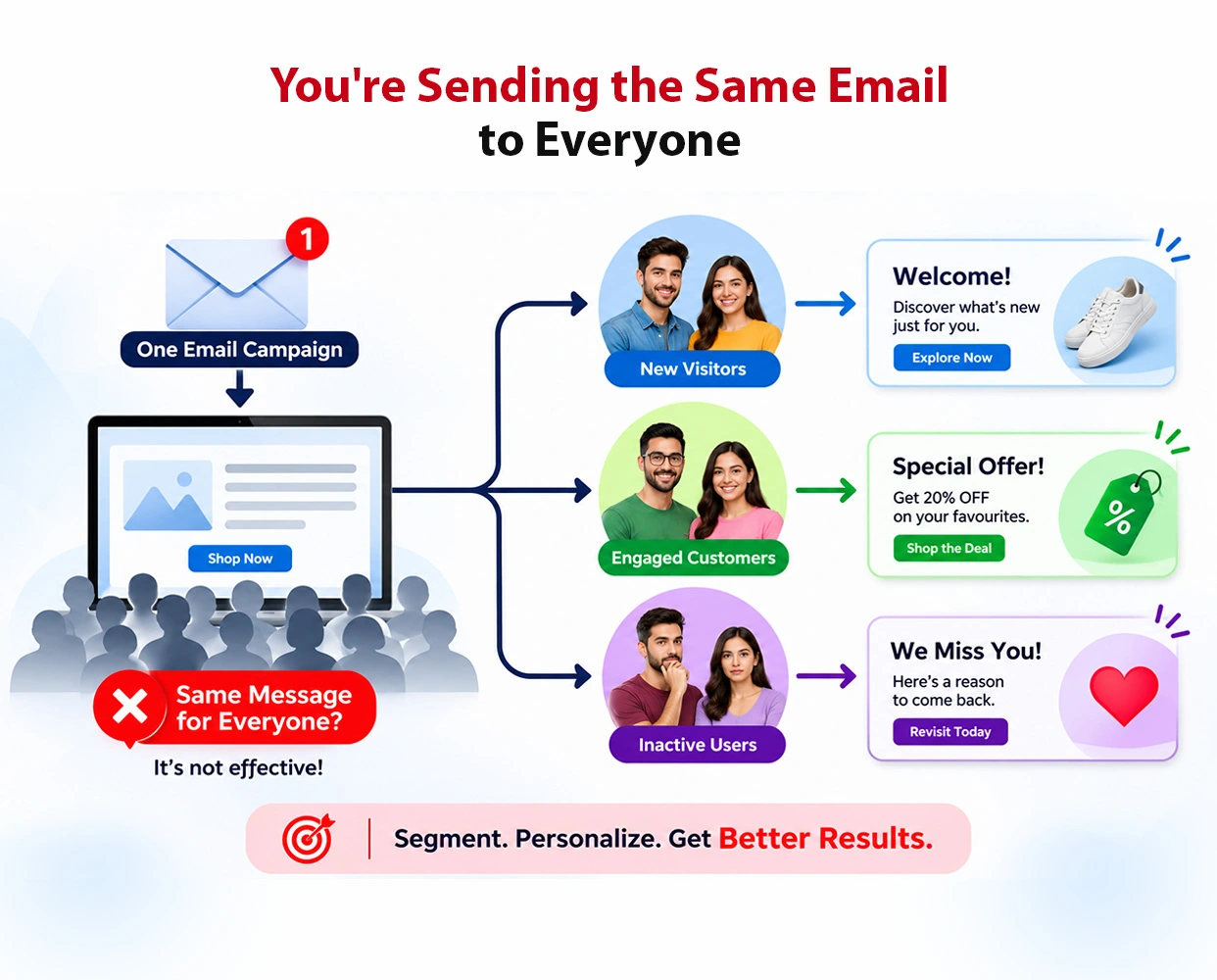
You're Sending the Same Email to Everyone
A person who has just subscribed may need basic information about your business. Someone who has already enquired may be comparing prices or evaluating your services. Sending both people the same promotional email ignores their different needs.
This is one of the most common email marketing mistakes. A large mailing list does not necessarily mean a relevant audience.
How to fix it:
 Segment contacts by interests, location, purchase history or enquiry status.
- Separate new subscribers from existing customers and sales-ready leads.
- Send service-specific information based on what contacts have shown interest in.
- Personalize the message beyond simply inserting the recipient's name.
For example, a business offering website design and SEO should not send every subscriber the same offer. Someone who enquired about website development may respond better to a website portfolio or project consultation.
Your Subject Line Gets Ignored
Even useful emails cannot generate leads if people do not open them. Generic subject lines such as "Monthly Update" or "Latest Offers" give recipients little reason to pay attention.
However, using exaggerated claims or misleading subject lines can damage trust and increase unsubscribes.
How to fix it:
Write subject lines that communicate a clear benefit or address a relevant problem. Keep them specific, concise and consistent with the email content. Test different approaches with a small audience before using the stronger version for the full list.
For example, instead of "Our New Services", try "Need More Qualified Enquiries From Your Website?"—provided the email genuinely addresses that need.
Your Email Content Talks About Your Business, Not the Customer
A common reason email marketing campaigns fail is that the message focuses entirely on the company: its achievements, services, announcements and offers. The recipient is left wondering how any of it helps them.
People are more likely to respond when the email connects with a problem they already want to solve.
How to fix it:
- Start with a customer problem or relevant situation.
- Explain the benefit of your solution in clear language.
- Use short paragraphs and scannable points.
- Include proof where available, such as a relevant case study, testimonial or product detail.
- Avoid adding multiple unrelated offers to one email.
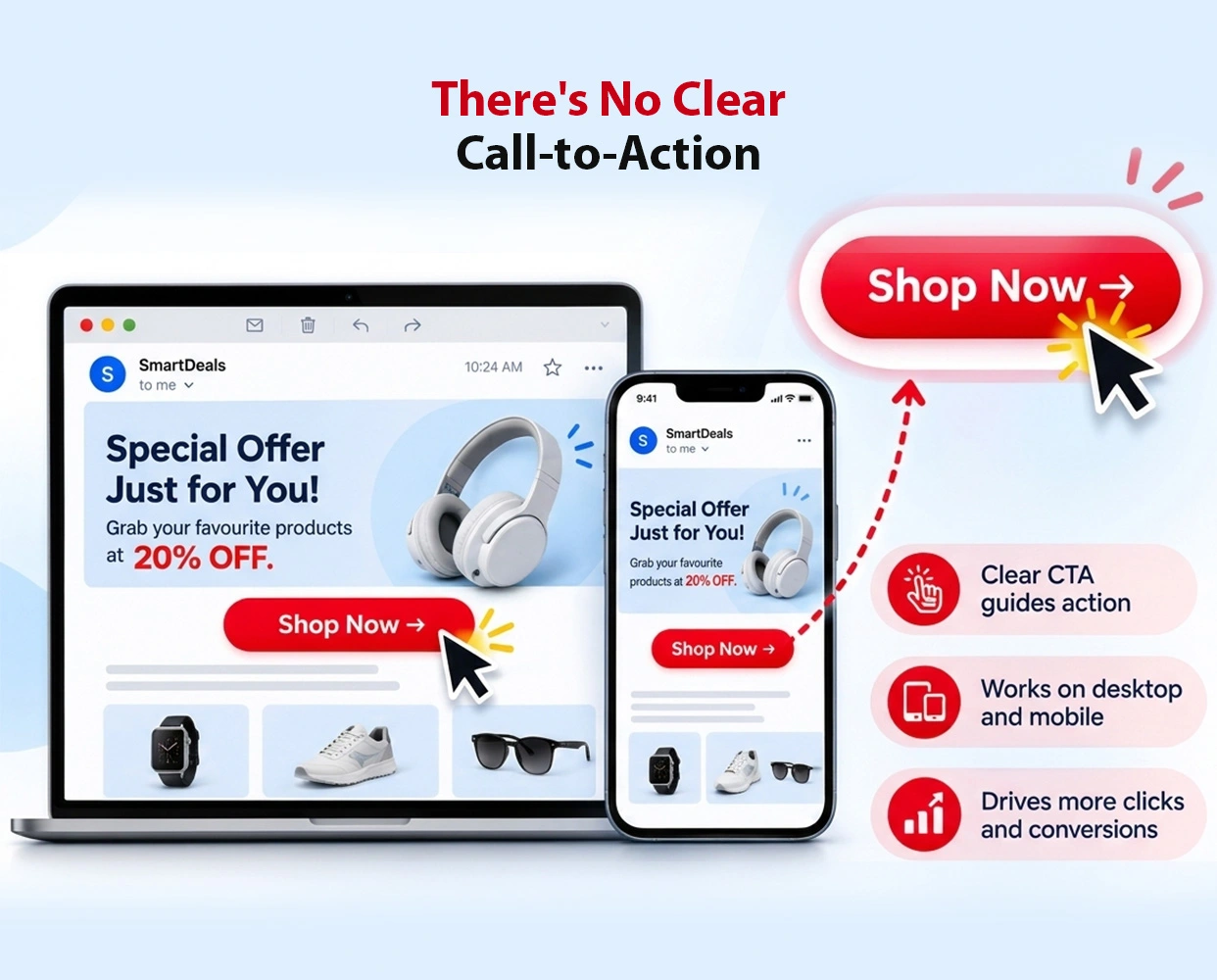
There's No Clear Call-to-Action
An email may explain your service well but still fail to generate enquiries if the reader does not know what to do next. Multiple buttons, competing offers and vague phrases can make the next step unclear.
How to fix it:
Give each campaign one primary action. Use specific CTA text such as:
 Request a Project Estimate
- Book a Product Demo
- Get a Consultation
- View Available Plans
Make sure the CTA leads to a relevant page—not simply your homepage. If the email promotes a particular service, direct the reader to that service page or a focused enquiry form.
Your Emails Are Not Reaching the Inbox
Low engagement may not always be a content problem. Emails can land in spam or fail to reach recipients because of poor list quality, authentication issues, excessive sending or weak sender reputation.
How to fix it:
- Send emails only to contacts who have a valid basis to receive them.
- Remove invalid, bounced and persistently inactive addresses.
- Configure SPF, DKIM and DMARC for your sending domain.
- Use a recognizable sender name and a consistent business email address.
- Monitor delivery, bounce, spam complaint and unsubscribe rates.
Avoid purchasing email lists or sending bulk messages to people who have not agreed to receive them. A smaller, relevant list is more valuable than a large list that does not engage.
You're Not Following Up With Interested Leads
A recipient may click an email, visit a service page or download a brochure without making an enquiry immediately. If there is no relevant follow-up, that interest can disappear.
This is where email lead generation needs a planned sequence rather than isolated promotional messages.
How to fix it:
Create follow-up emails based on meaningful actions. For example:
After a download:
send a useful guide or related resource.After a product enquiry:
share specifications or answers to common questions.After a consultation request:
send confirmation and the next steps.After a purchase:
share onboarding information or relevant recommendations.
Use automation where it improves timing and relevance. Do not send repeated reminders simply because someone has not clicked.
You're Measuring Opens Instead of Business Results
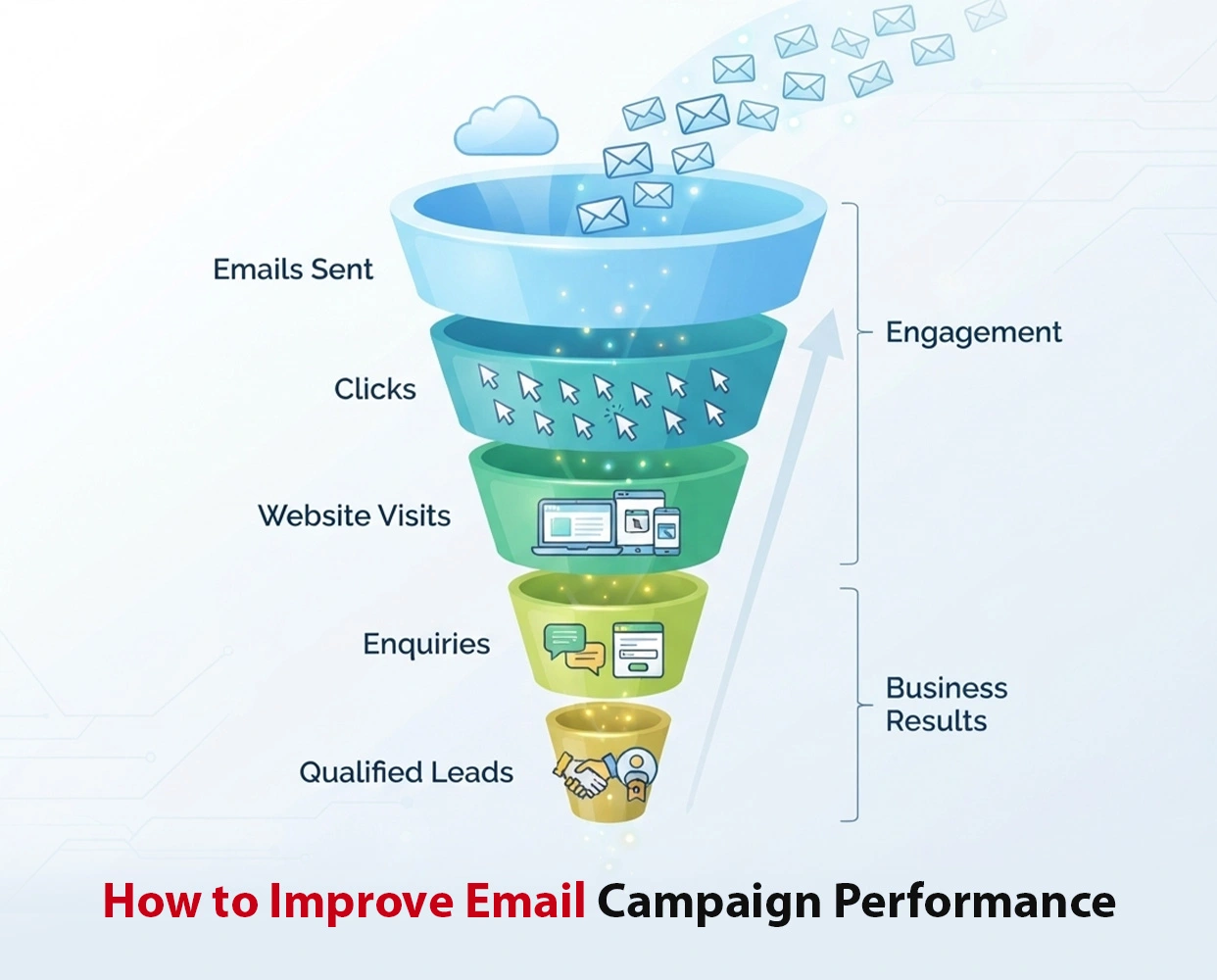
Open rates and clicks can help identify engagement, but they do not tell you whether a campaign is generating qualified enquiries or revenue. Privacy features and email-client changes can also make open-rate data less reliable.
A better email campaign optimization process connects campaign activity with actual outcomes.
Track:
- Click-through rate to understand which links attract attention.
- Landing-page visits and form submissions.
- Qualified enquiries generated by each campaign.
- Sales or revenue attributed to email where tracking allows.
- Unsubscribes, bounces and spam complaints.
Calculate your email conversion rate using a clearly defined action. For example, if 500 people click through and 15 submit an enquiry form, the click-to-enquiry conversion rate is 3%. This helps identify whether the problem lies in the email or the landing page.
How to Improve Email Campaign Performance
Before sending another campaign, review the complete journey—from audience selection to the final conversion. Check whether the email reaches the right segment, makes one relevant offer, includes a clear CTA and directs users to a page that supports the promised action.
Businesses that need a more structured approach can benefit from professional email marketing services covering audience segmentation, responsive email design, automation, campaign tracking and ongoing optimization. The right strategy should be based on business goals and actual campaign data, not simply the number of emails sent.
Email should also work alongside your other marketing channels. A visitor may first find your business through search, explore your website and later respond to an email. Our guide on 8 Reasons Your Website Fails at Lead Generation explains why the website experience and enquiry process matter after a visitor clicks through.
Final Thoughts
If your emails are not generating leads, sending more messages is rarely the first solution. Start by improving audience relevance, message clarity, deliverability, follow-ups and conversion tracking. Test one change at a time and use the results to guide the next campaign.
Consistent improvement turns email marketing campaigns from routine announcements into a measurable channel for building relationships and generating business enquiries.