8 Reasons Your Website Fails at Lead Generation
- By Admin
- 17 August 2026
Many businesses invest significant time and money into driving traffic through SEO, PPC, social media, and content marketing. Yet despite increasing website visitors, enquiries remain low and sales opportunities fail to materialize.
The problem isn't always traffic. In fact, many websites attract the right audience but struggle with website lead generation because visitors encounter friction before taking action.
Whether you're investing in organic search, paid advertising, or social media campaigns, your website should function as a lead-generation asset rather than a digital brochure.
Let's explore the eight most common reasons websites fail to generate leads and what businesses can do to improve performance.
Your Website Doesn't Clearly Communicate Value
Visitors make decisions within seconds of landing on a website.
If they cannot immediately understand:
 What you offer
- Who you help
- Why they should trust you
They will leave.
Many websites focus heavily on company information instead of customer problems and solutions.
Strong messaging should clearly answer:
"Why should I choose this business?"
Your homepage, service pages, and landing pages should communicate benefits rather than simply listing features.
Businesses working with professional web design teams often see significant improvements because messaging, design, and user experience are aligned around customer intent.
A clear value proposition is one of the most overlooked factors affecting website lead generation.
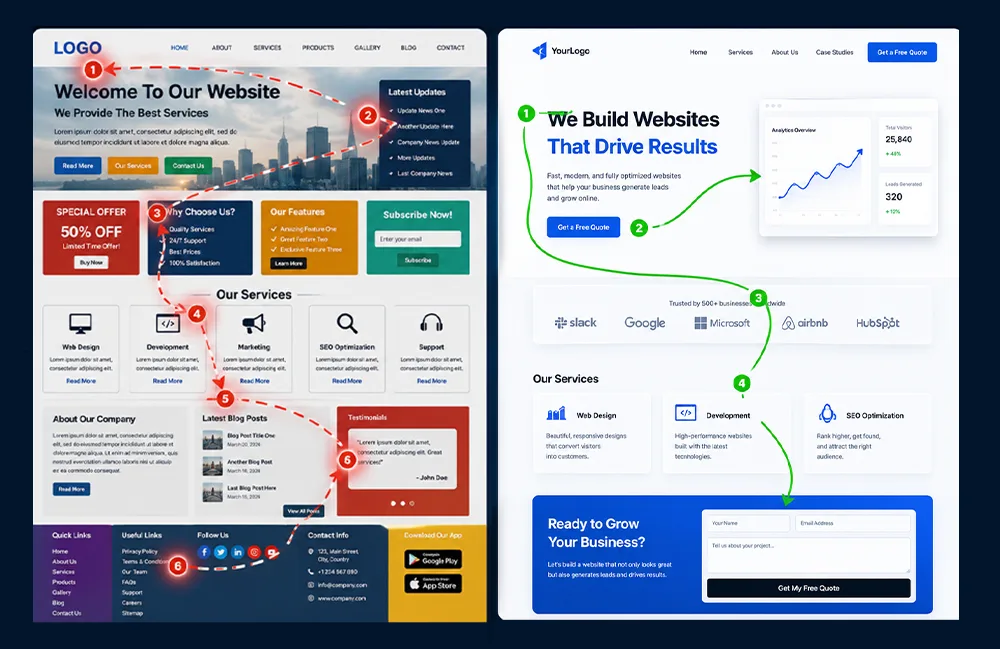
Poor Website Design Creates Friction
Even if your marketing campaigns are driving quality traffic, poor design can prevent conversions.
Common design issues include:
 Cluttered layouts
- Confusing navigation
- Poor mobile experience
- Slow-loading pages
- Excessive distractions
Modern users expect fast, intuitive experiences.
A professionally designed website helps visitors find information quickly and encourages action.
Businesses investing in high-quality web design services often experience better engagement, lower bounce rates, and improved conversion performance.
Good design is not just about aesthetics; it directly impacts website traffic conversion.
Your Calls-to-Action Are Weak or Missing
Many websites assume visitors know what to do next.
They don't.
Every page should guide users toward a specific action such as:
- Request a quote
- Book a consultation
- Download a resource
- Contact your team
Weak CTAs often use vague phrases like:
- Learn More
- Click Here
- Explore
Instead, use action-oriented messaging that communicates value.
Examples:
- Get a Free Website Audit
- Request a Custom Proposal
- Schedule a Strategy Call
Clear CTAs reduce friction and improve conversion rate optimization efforts.
Your Website Loads Too Slowly
Page speed remains one of the most important user experience factors.
Visitors abandon websites that take too long to load.
Slow websites often result from:
- Unoptimized images
- Excessive scripts
- Poor hosting
- Heavy themes and plugins
Beyond user experience, page speed can influence organic visibility and engagement.
Fast websites typically experience:
- Higher engagement
- Better user retention
- Improved lead generation
- Increased conversion rates
A website development company focused on performance optimization can help improve both user experience and lead acquisition.
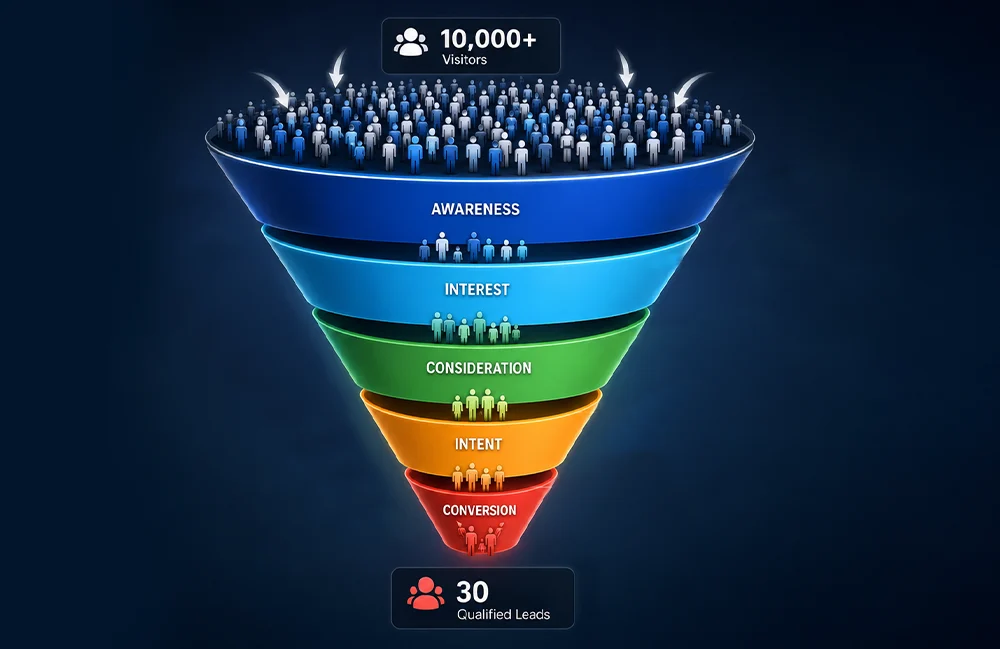
You're Attracting the Wrong Traffic
Traffic alone is not a success metric.
Many businesses celebrate growing visitor numbers while ignoring traffic quality.
For example:
- Ranking for irrelevant keywords
- Poor audience targeting
- Broad advertising campaigns
- Untargeted content creation
These issues often result in visitors who have no buying intent.
An effective SEO marketing strategy focuses on attracting qualified users who are actively searching for solutions.
When traffic aligns with user intent, website lead generation improves naturally.
Businesses running paid campaigns may also benefit from understanding why their advertising efforts are underperforming. Our guide on Why Your Facebook & Instagram Ads Are Failing to Convert explains common targeting and conversion mistakes that affect lead quality.
Your Forms Create Too Much Resistance
Many businesses unintentionally reduce conversions through lengthy contact forms.
Users often abandon forms that request excessive information.
Instead of asking for:
- Company size
- Budget details
- Multiple contact fields
focus on collecting only essential information initially.
Effective forms should:
- Be easy to complete
- Work seamlessly on mobile
- Minimize unnecessary fields
- Provide reassurance about privacy
Reducing friction is a core principle of conversion rate optimization.
Small changes in form design can have a significant impact on lead volume.
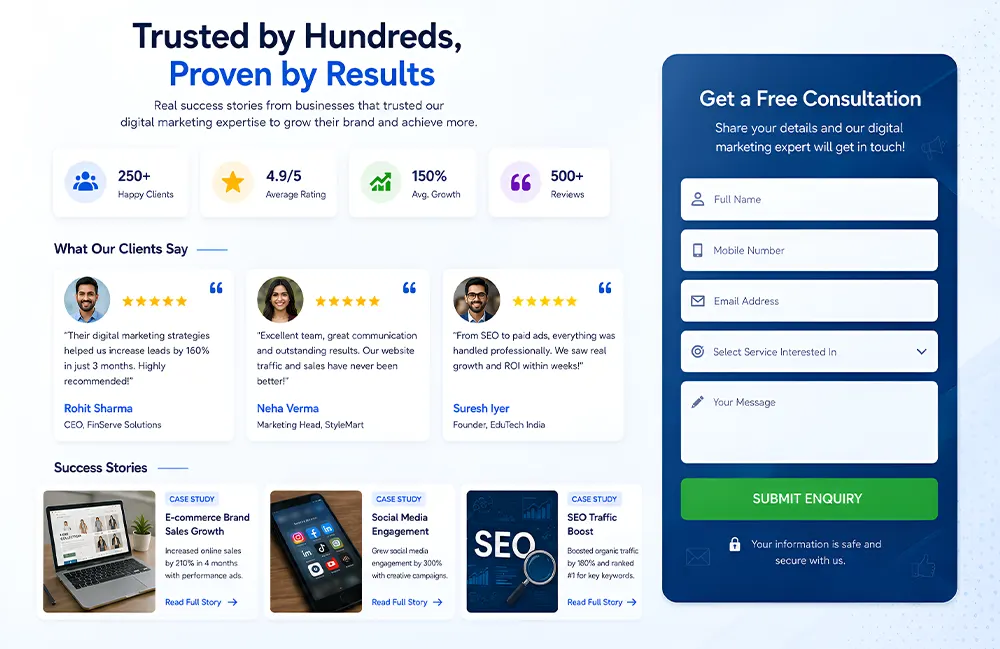
You Lack Trust Signals
Visitors rarely convert unless they trust the business behind the website.
Trust signals help reduce uncertainty and increase confidence.
Examples include:
- Client testimonials
- Case studies
- Reviews
- Certifications
- Industry awards
- Portfolio examples
Without social proof, visitors may hesitate to submit enquiries.
This is especially important for service-based businesses where purchasing decisions involve higher levels of trust.
A strong reputation combined with strategic content can improve both website traffic conversion and overall lead quality.
Businesses using social media effectively often build credibility before visitors even reach their website. Our blog 7 Social Media Marketing Strategies to Get More Customers explains how consistent social engagement supports trust and customer acquisition.
You're Not Measuring Conversion Performance
Many businesses track traffic but fail to monitor what happens after visitors arrive.
Without data, it's impossible to identify:
- Drop-off points
- User behavior patterns
- High-performing pages
- Conversion bottlenecks
Key metrics to monitor include:
- Conversion rate
- Form submissions
- Call tracking
- Bounce rate
- User flow
- Landing page performance
Understanding the conversion rate in digital marketing allows businesses to make informed decisions rather than relying on assumptions.
Continuous testing and optimization are essential for sustainable growth.
The most successful companies regularly evaluate:
- Page layouts
- CTAs
- Forms
- Headlines
- User journeys
This ongoing process helps maximize the return on every marketing channel.
Why Lead Generation Is More Important Than Traffic
Many businesses focus heavily on rankings, clicks, and impressions.
While traffic is important, it only becomes valuable when it generates enquiries, leads, and sales opportunities.
A website should function as a conversion tool that supports:
- SEO campaigns
- PPC advertising
- Social media marketing
- Email marketing
- Content marketing
Businesses that prioritize user experience and lead generation consistently achieve better long-term results than those focused solely on traffic growth.
Final Thoughts
A website can attract thousands of visitors every month and still fail to generate meaningful business results.
Successful website lead generation depends on more than visibility. It requires a combination of strong messaging, effective design, clear calls-to-action, trust-building elements, and continuous optimization.
If your website receives traffic but produces few enquiries, the issue often lies in the conversion process rather than the traffic source itself.
By addressing these eight common issues, businesses can improve user experience, strengthen website traffic conversion, and achieve better conversion rate optimization results.
Ultimately, the goal is not simply attracting visitors, it's turning those visitors into customers.