Why Most Facebook & Instagram Ads Fail to Generate Leads
- By Admin
- 15 June 2026
Running ads on social media has become easier than ever, but generating quality leads consistently is still one of the biggest challenges for businesses. Many brands invest heavily in campaigns expecting quick results, only to end up with low-quality inquiries, poor conversions, or wasted ad budgets.
The problem is not the platforms themselves. In most cases, businesses fail because they launch campaigns without a proper strategy, audience understanding, or conversion-focused funnel.
Today, successful facebook and instagram ads require much more than boosting posts or selecting random targeting options. Businesses need a clear content strategy, optimized creatives, audience segmentation, landing page alignment, and continuous campaign optimization to generate measurable results.
As competition increases across digital platforms, brands that understand user behavior and advertising psychology are outperforming businesses still relying on outdated ad tactics.
The Biggest Mistake Businesses Make With Social Media Ads
One of the most common reasons ads fail is that businesses focus only on visibility instead of customer intent.
Many campaigns generate impressions and clicks but fail to convert because the messaging does not solve a real problem or guide users toward action.
Effective paid social media advertising is not just about running campaigns — it is about building trust throughout the customer journey.
For example:
 A user seeing your ad for the first time may not be ready to buy immediately.
- Some users need educational content first.
- Others need testimonials, case studies, or comparisons before making decisions.
This is why businesses need a complete social media advertising strategy instead of isolated promotional campaigns.
Brands that consistently generate leads usually combine:
- Organic content
- Retargeting campaigns
- Educational videos
- Lead magnets
- Funnel-based advertising
- Conversion-focused landing pages
This approach builds authority while improving lead quality over time.
Businesses that understand how to move audiences from engagement to conversion often see better long-term performance. This strategy is explained further in our guide on Social Media Marketing: Turn Followers into Customers.
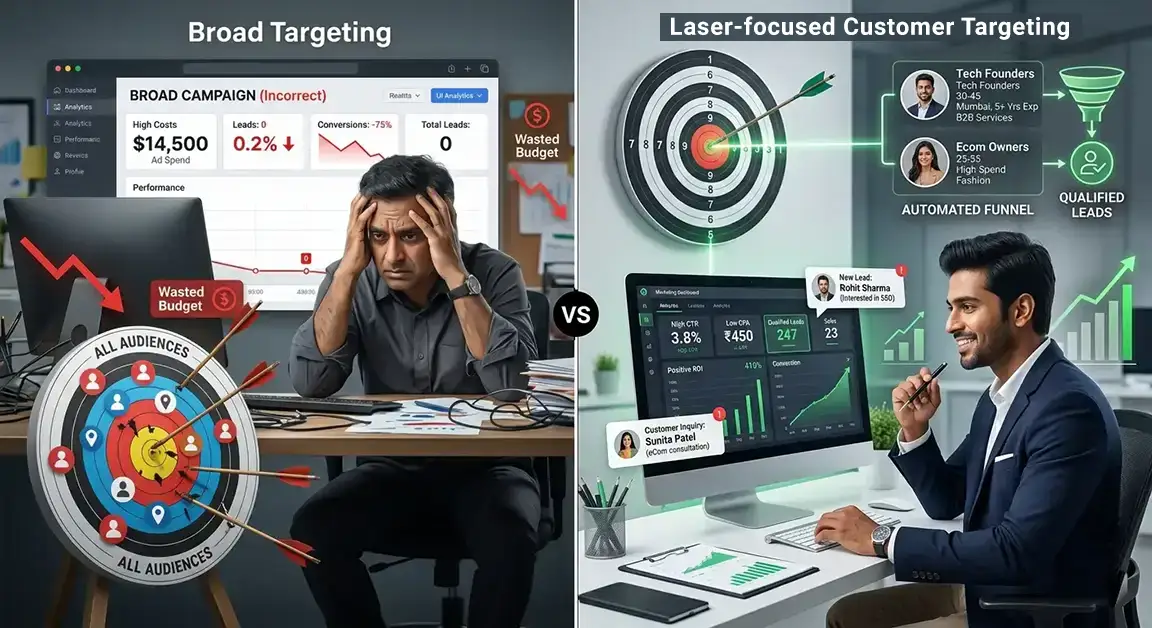
Poor Audience Targeting Leads to Wasted Ad Spend
Targeting the wrong audience is another major reason why facebook and instagram ads fail.
Many businesses select broad interests without understanding:
 Customer intent
- Pain points
- Buying behavior
- Audience maturity
- Funnel stage
As a result, campaigns attract users who click out of curiosity but never convert.
An effective facebook advertising strategy focuses on targeting users based on:
- Previous website visits
- Engagement history
- Purchase intent
- Customer demographics
- Lookalike audiences
- Retargeting data
Businesses using audience segmentation usually generate better-quality leads while lowering cost per acquisition.
For example, retargeting users who watched 75% of a video ad often delivers stronger conversion rates than targeting cold audiences immediately.
Modern advertising platforms reward relevance. Ads shown to the right audience with the right message usually receive:
- Better engagement
- Lower CPC
- Higher CTR
- Improved lead quality
- Better return on ad spend
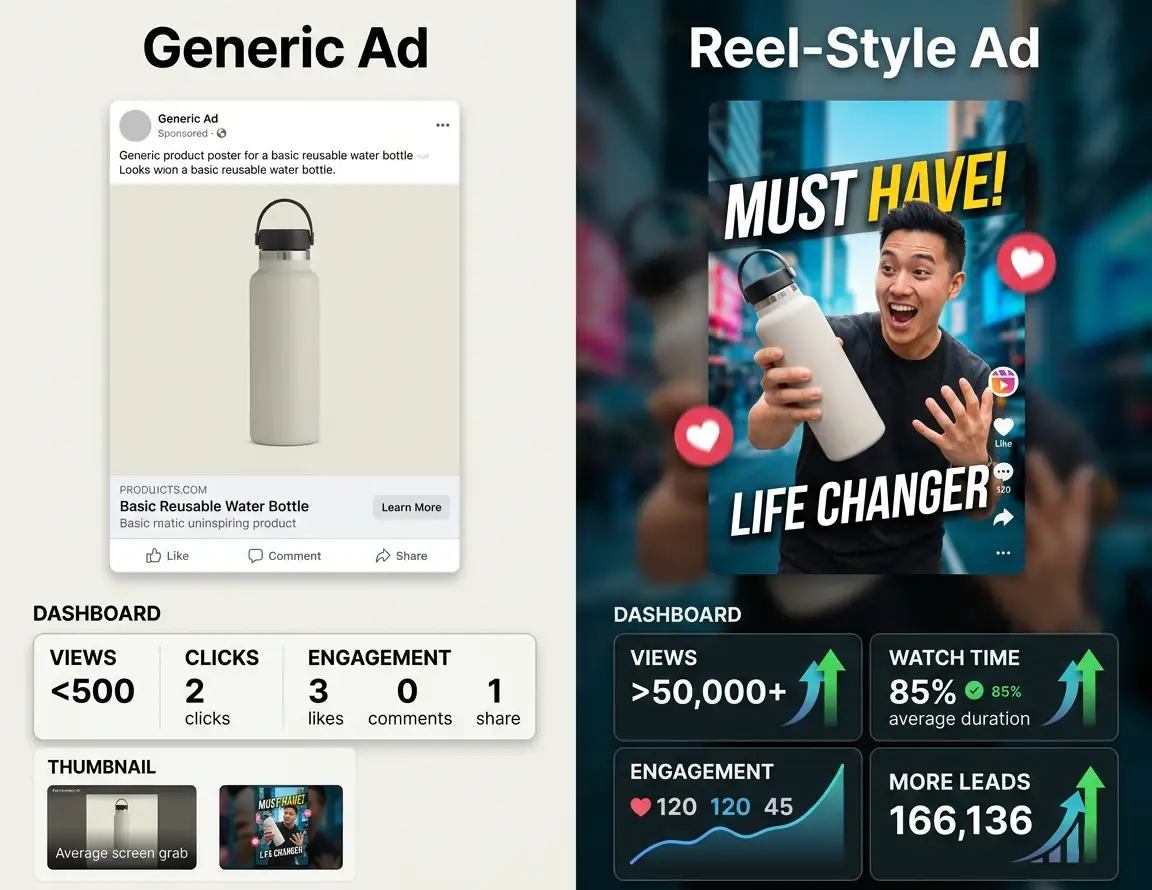
Weak Ad Creatives Reduce Engagement Instantly
People scroll through hundreds of posts daily. If creatives fail to capture attention within seconds, users simply move on.
This is where many instagram ads for business struggle.
Businesses often use:
- Generic stock images
- Overcrowded creatives
- Weak headlines
- Low-quality videos
- Unclear messaging
High-performing ads focus on:
- Strong hooks
- Problem-solving headlines
- Emotional triggers
- Short-form video content
- Clear CTAs
- Mobile-first design
Video-based creatives, especially reels and short-form vertical videos, continue to outperform static ads across most industries.
Businesses investing in creative testing and storytelling usually improve engagement significantly.
A strong ad creative should answer:
- What problem does this solve?
- Why should users care?
- What action should they take next?
Without these elements, even large ad budgets fail to generate meaningful results.
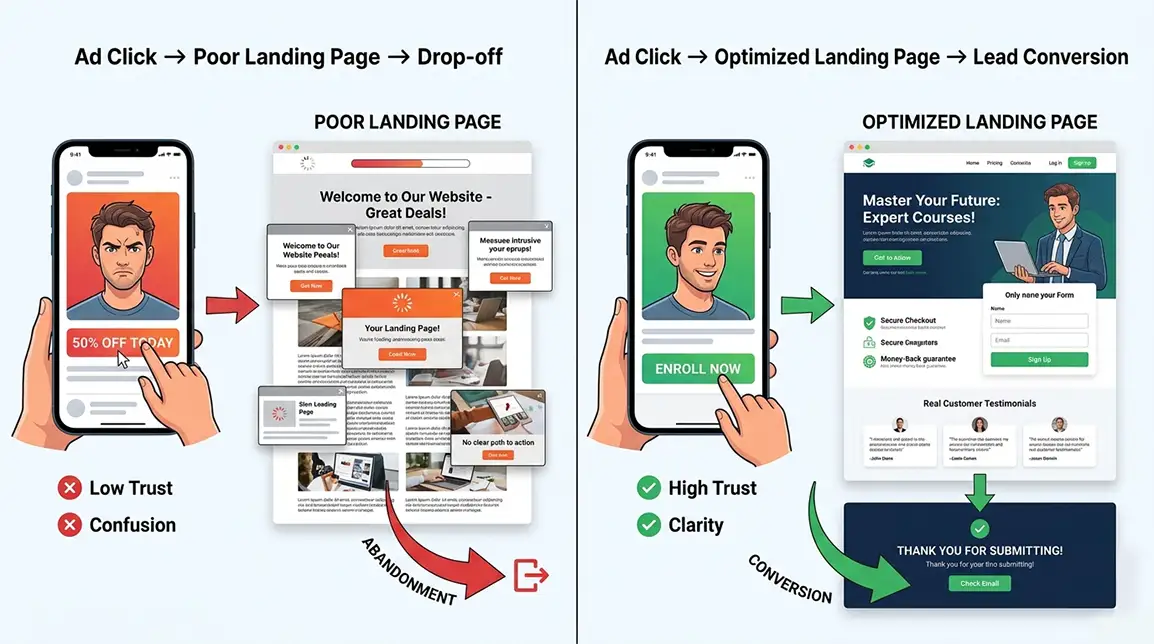
Landing Pages Often Break the Conversion Journey
Even when ads perform well, businesses frequently lose leads because of poor landing pages.
Users click on ads expecting:
- Fast-loading pages
- Relevant information
- Easy navigation
- Trust signals
- Clear CTAs
Instead, many landing pages feel disconnected from the original ad message.
This disconnect creates friction and increases bounce rates.
Successful Facebook ads optimization involves improving the entire conversion journey, not just the ads themselves.
Landing pages should:
- Match the ad intent
- Load quickly on mobile
- Include social proof
- Use clear headlines
- Focus on one primary CTA
- Reduce unnecessary distractions
Small improvements in landing page experience often increase conversion rates dramatically.
Businesses combining SEO and paid campaigns also tend to improve overall acquisition performance. This integrated approach is discussed in our blog on SEO and PPC Drive Better Results.
Businesses Ignore the Importance of Funnel-Based Advertising
One major reason facebook and instagram ads fail is because businesses try to sell immediately without building trust first.
Modern consumers rarely convert after seeing a single ad.
Successful brands use a structured funnel approach:
- Awareness content
- Engagement campaigns
- Retargeting ads
- Conversion-focused offers
This layered approach helps businesses nurture audiences gradually.
An effective Instagram ads strategy focuses on building familiarity before pushing aggressive sales offers.
For example:
- Educational reels build awareness
- Testimonials increase trust
- Retargeting campaigns improve conversions
- Offer-based campaigns drive inquiries
Brands that follow this process generally achieve:
- Higher lead quality
- Lower acquisition costs
- Better customer retention
- Increased lifetime value
Inconsistent Branding Reduces Customer Trust
Consistency plays a major role in social media advertising success.
Businesses often run ads with visuals, messaging, and tones that differ completely from their website or social profiles.
This inconsistency creates confusion and lowers trust.
A strong brand presence across:
- Facebook
- Instagram
- LinkedIn
- Website content
- Landing pages
helps users recognize and trust the business faster.
Companies investing in consistent branding across multiple platforms usually perform better with both organic and paid campaigns.
Businesses using integrated Social Media Marketing Services often maintain stronger brand consistency while improving campaign performance.
Similarly, professional Facebook Marketing Services and Instagram Marketing Services help brands align creatives, targeting, and messaging for better lead generation.
Lack of Testing Stops Campaign Improvement
One of the biggest differences between successful advertisers and struggling businesses is testing.
High-performing campaigns rarely succeed on the first attempt.
Experienced marketers continuously test:
- Headlines
- Creatives
- Audiences
- CTA buttons
- Landing pages
- Ad formats
- Campaign objectives
Without testing, businesses cannot identify what actually drives results.
This is especially important for businesses running paid social media advertising campaigns in competitive industries.
Data-driven optimization helps reduce wasted ad spend while improving campaign efficiency over time.
Why Multi-Platform Marketing Performs Better
Businesses relying only on Facebook or Instagram often limit their growth potential.
Modern buyers interact with brands across multiple platforms before converting.
For example:
- Users may discover a business through Instagram reels
- Research it on Google
- Check LinkedIn credibility
- Watch reviews or testimonials
- Then convert later through retargeting ads
This is why integrated marketing strategies perform better in the long run.
Businesses combining:
- Social media advertising
- SEO
- Content marketing
- Influencer collaborations
- LinkedIn branding
usually build stronger authority and trust online.
Brands investing in LinkedIn Marketing Services and Influencer Marketing Services often improve audience trust while expanding reach to high-intent users.
Our guide on Social Media Marketing Strategies Drive Business Growth explains how businesses combine multiple channels to improve long-term growth and customer acquisition.
Conclusion
Generating leads from facebook and instagram ads is no longer about running random campaigns or boosting posts occasionally.
Today's digital landscape requires:
- Strategic audience targeting
- Funnel-based advertising
- Creative storytelling
- Consistent branding
- Landing page optimization
- Continuous testing
Businesses that focus on customer intent and long-term relationship building consistently outperform competitors relying only on short-term promotions.
When implemented correctly, social media advertising becomes one of the most powerful channels for:
- Lead generation
- Brand awareness
- Customer acquisition
- Business growth
The brands generating the best results today are not simply spending more money on ads — they are building smarter strategies around audience behavior, trust, and conversion psychology.