Google Spam Update 2026: 7 SEO Mistakes to Avoid
- By Admin
- 12 September 2026
Google Search keeps getting better at separating genuinely useful pages from content created primarily to manipulate rankings. The latest Google spam update 2026 rollout is another reminder that sustainable SEO is no longer about publishing more pages, adding more keywords, or building as many links as possible.
Google's August 2026 spam update started on August 18 and finished after approximately 2 days and 16 hours. It followed the March and June 2026 spam updates and several major core updates during 2026.
The impact was significant. Data reported by Search Engine Land from SE Ranking found that 16.71% of URLs ranking in Google's top 10 fell beyond position 100 during the August update window, compared with 9.2% during a comparable period without a confirmed update.
That does not mean every ranking drop was caused by spam. It does mean businesses should take this Google spam update seriously and review how their website creates, optimizes, and promotes content.
Here are seven SEO mistakes worth checking now.
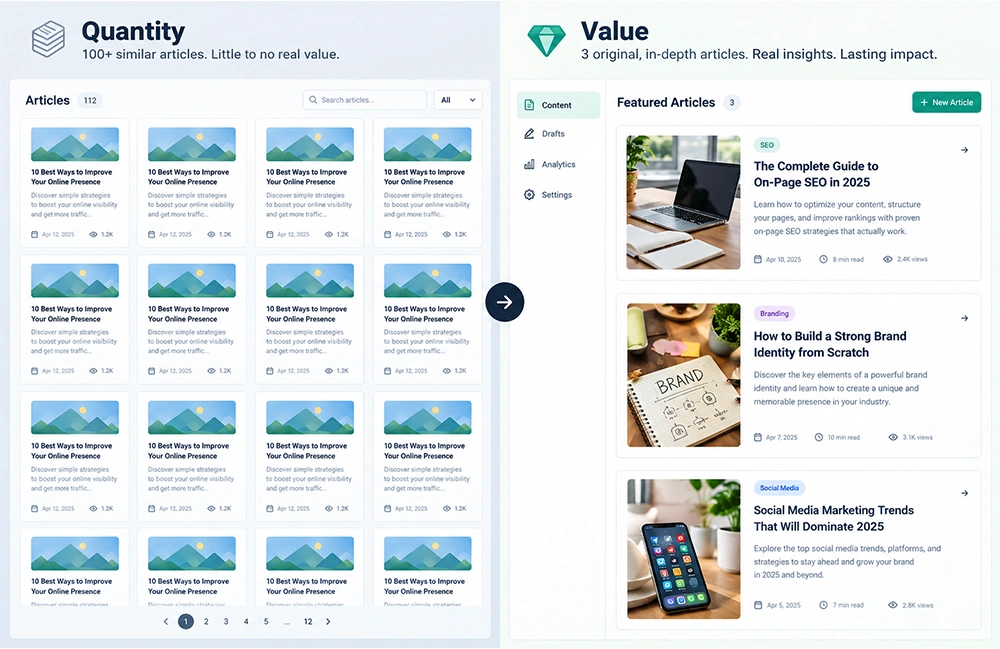
Publishing Pages at Scale Without Adding Real Value
One of the biggest risks in modern SEO is creating hundreds of pages simply because there are hundreds of keywords.
Google defines scaled content abuse as producing large amounts of content primarily to manipulate search rankings rather than help users. This applies regardless of whether the content was produced manually, automatically, or with generative AI.
For example, creating separate pages for:
 “SEO company in Mumbai”
- “SEO company Mumbai”
- “SEO services Mumbai”
- “Mumbai SEO agency”
is not automatically wrong. The problem begins when these pages are substantially similar and provide no meaningful reason for the user to visit one instead of another.
Better approach: Build fewer, stronger pages with original information, examples, data, expert input, and a clear purpose.
Treating AI-Generated Content as a Shortcut
AI can help with research, outlines, editing, and content workflows. But publishing large quantities of unedited AI content is not a sustainable SEO strategy.
Google's guidance is clear: AI-generated content itself is not automatically against the rules. The concern is scaled content that provides little or no additional value to users.
A page that simply summarizes information already available across the web will struggle to demonstrate genuine expertise.
Before publishing AI-assisted content, ask:
What does this page offer that the searcher cannot easily get from the next five results?
Add first-hand observations, original examples, screenshots, comparisons, expert commentary, calculations, case data, or practical recommendations wherever appropriate.
Keyword Stuffing Instead of Search Intent
Keyword optimization still matters, but repeating the same phrase unnaturally is one of the classic SEO mistakes that can make content harder to read and less useful.
A page targeting “SEO services” does not need the phrase in every heading, paragraph, image caption, and sentence.
Instead, cover the complete topic naturally.
For an SEO services page, that might include:
- technical SEO
- on-page optimization
- keyword research
- content strategy
- local SEO
- link building
- SEO reporting
- conversion-focused optimization
This creates topical relevance without forcing exact-match keywords.
The goal is not to make Google see a keyword as many times as possible. The goal is to make the page the best answer for the query.
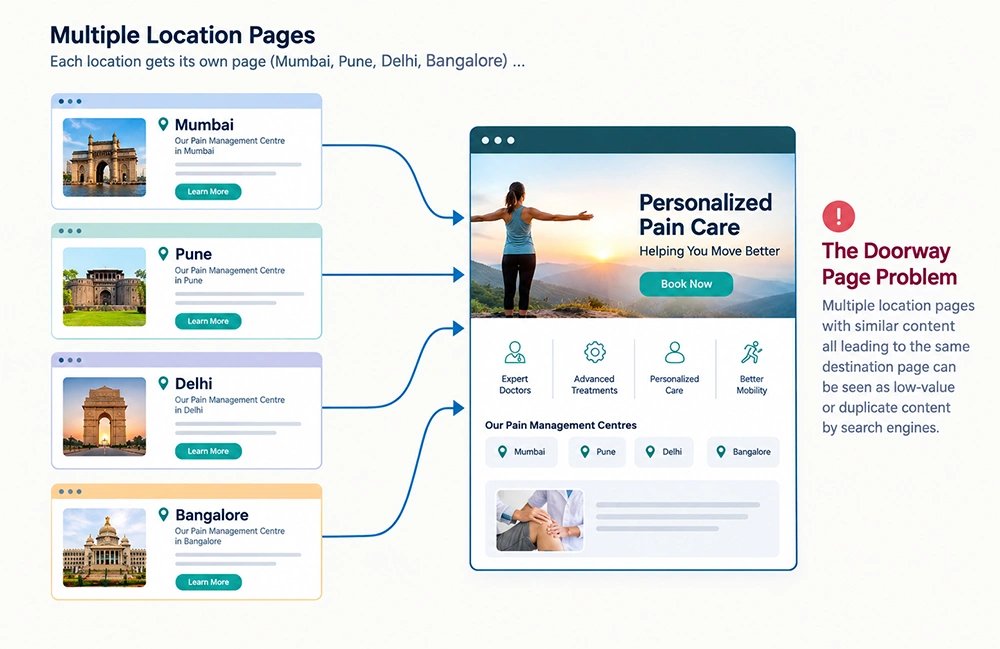
Creating Doorway Pages for Every Location
Local SEO creates another common opportunity for manipulation.
A business may legitimately serve multiple cities. But creating dozens of near-identical city pages that simply replace the location name can create a poor experience.
Google's spam policies describe doorway abuse as creating pages for specific, similar queries that ultimately funnel users toward the same destination without providing enough independent value.
A useful location page should contain information genuinely relevant to that market.
For example, a strong Mumbai SEO page could discuss:
 industries commonly served in Mumbai
- local search behaviour
- examples of campaigns
- service coverage
- relevant business challenges
- genuine customer experience
Location + unique value is far stronger than location + duplicated template.
Building Links for Quantity Instead of Relevance
Link building remains part of SEO, but links created primarily to manipulate rankings can become a liability.
Common warning signs include:
- irrelevant paid links
- excessive exact-match anchor text
- low-quality link networks
- automated link placement
- large numbers of unrelated directory links
- guest posts created mainly for backlinks
This is where SEO spam and legitimate authority-building can look very different.
A healthier strategy focuses on earning relevant mentions, publishing useful resources, digital PR, genuine partnerships, industry citations, and content worth referencing.
One strong, contextually relevant link can be more valuable than dozens of unrelated placements.
Ignoring Site Reputation and Third-Party Content
Google's site reputation policy targets situations where third-party content is published on an established website primarily to take advantage of that site's existing ranking signals.
This is particularly important for publishers, large websites, and businesses that allow external contributors.
Before adding third-party content, check:
Who created it? Why was it published? Does it genuinely belong on this website? Does it provide value to the existing audience?
Google also clarified its enforcement approach for users in the European Economic Area in August 2026, so businesses operating internationally should keep an eye on how these policy changes apply to their markets.
Making SEO Changes Without Diagnosing the Real Problem
A ranking drop after a Google algorithm update does not automatically mean your website received a spam action.
This distinction matters.
Google's ranking history shows that 2026 has already included multiple spam and core updates. The December 2025 core update also ran for more than 18 days, showing why ranking changes need to be evaluated over time rather than based on a single day's position.
If traffic declines, check:
- Which pages lost visibility?
- Which queries declined?
- Did impressions fall or only clicks?
- Did competitors replace your rankings?
- Was there a confirmed Google update?
- Are there technical indexing problems?
- Does the affected content actually satisfy search intent?
- Are there spam-policy risks on the affected pages?
This is where a proper SEO audit becomes more useful than immediately rewriting everything.
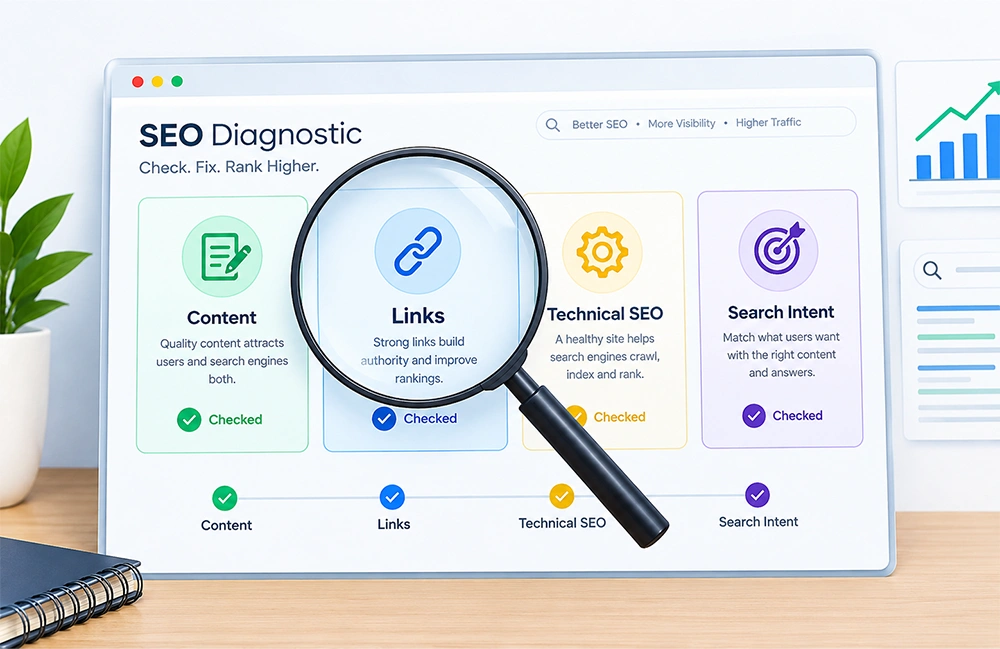
What Businesses Should Do After the August 2026 Spam Update
The safest response to Google algorithm changes is not panic. It is diagnosis and improvement.
Start with your highest-value pages. Review content quality, internal linking, search intent, backlinks, indexation, duplicate pages, structured data, and technical SEO.
Then look at your content production process. If your website has recently published a large number of similar articles or landing pages, evaluate whether each page deserves to exist independently.
Most importantly, don't remove content simply because rankings dropped. Google's guidance for core updates emphasizes assessing the overall quality and usefulness of your content rather than making quick, unrelated changes.
A structured SEO audit and ongoing SEO strategy can help identify whether the issue is technical, content-related, competitive, or connected to spam-policy risks.
Final Takeaway
The biggest lesson from the Google spam update is simple: SEO shortcuts become increasingly difficult to hide.
Publishing more content is not automatically better. More keywords do not automatically mean better relevance. More backlinks do not automatically create authority.
Websites that invest in original information, useful content, technically sound pages, relevant authority signals, and a genuinely helpful user experience are better positioned to handle both spam-system changes and broader Google algorithm changes.
The August 2026 update should therefore be treated as an opportunity to audit your SEO foundation—not as a reason to chase another shortcut.
If your rankings changed significantly after the update, start by identifying what changed, which pages were affected, and why. That evidence-based approach is far more reliable than making SEO changes based on assumptions.