Email Marketing: Strategies, Benefits & Best Practices That Convert
- By Admin
- 26 November 2026
Email marketing helps businesses connect directly with subscribers, nurture leads, and encourage repeat purchases. However, results depend on sending relevant messages to the right audience at the right time.
An effective email marketing strategy combines valuable content, timely follow-ups, and measurable goals to build relationships and drive conversions.
What Is an Email Marketing Strategy?
An email marketing strategy is a plan to send relevant messages to subscribers based on their needs and stage in the customer journey. It includes audience targeting, campaign goals, content, timing, and performance tracking.
For example, businesses can use educational emails, case studies, product recommendations, and follow-ups to nurture leads and encourage repeat purchases. The goal is to deliver the right message to the right audience at the right time.
Key Email Marketing Benefits for Businesses
When planned around clear objectives, email can support several business outcomes:

Lead nurturing:
Keep your business relevant while prospects compare solutions and prepare to make a decision.
-
Customer retention:
Share useful updates, relevant offers, and follow-up communication that encourages repeat purchases.
-
Personalized communication:
Use subscriber preferences and past interactions to make messages more relevant.
-
Measurable performance:
Track clicks, conversions, unsubscribes, and revenue attributed to campaigns.
-
Scalable outreach:
Communicate with different audience segments without manually writing every message.
These email marketing benefits depend on relevance, consent, delivery, and execution. Email is not automatically more profitable than other channels; its contribution should be measured against your business goals.
5 Email Marketing Best Practices That Improve Results
Segment Your Audience Before Sending
A subscriber who downloaded a guide has different needs from a customer who has already purchased. Segment your list using relevant information such as interests, purchase history, customer status, or the content someone requested.
This helps you send targeted messages instead of generic promotions. Collect only the information you need, explain how it will be used, and respect subscriber preferences.
Write Subject Lines That Set Clear Expectations
A subject line should communicate the email's value without exaggeration. Avoid misleading urgency, vague promises, or clickbait that the message cannot deliver.
For instance, “A checklist for improving your next email campaign” gives readers a clearer reason to open the message than “You won't believe this offer.”
Your preview text should complement the subject line, while the email itself should deliver what was promised.
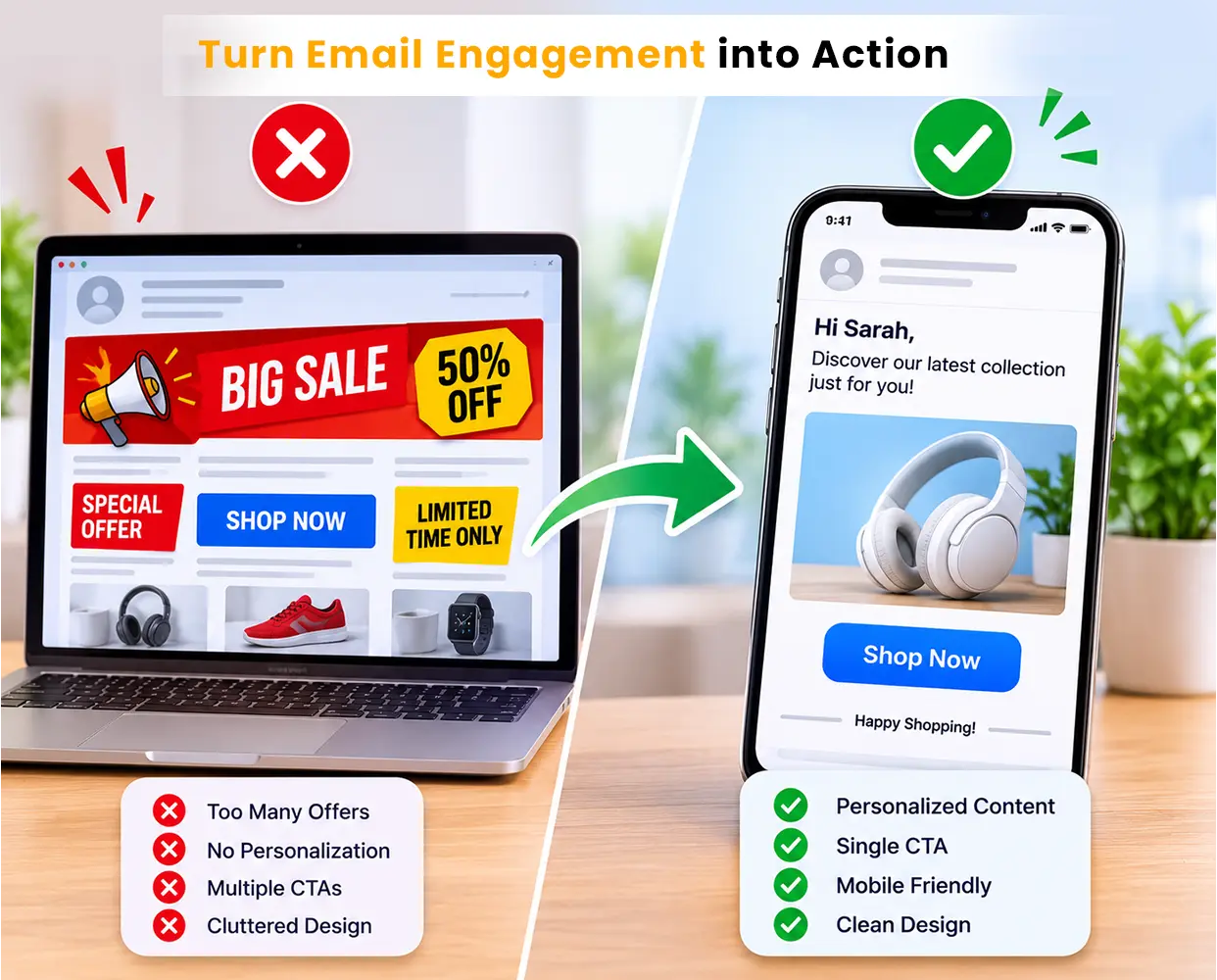
Make Every Email Easy to Act On
Choose one primary action for each message: request a consultation, read a guide, explore a product, or complete a purchase. Use a clear call to action (CTA), concise copy, and a mobile-friendly layout.
Before sending, check how the email appears on mobile devices, whether links work, and whether the CTA leads to a relevant page. A strong email cannot compensate for a confusing landing page.
Protect Deliverability and Subscriber Trust
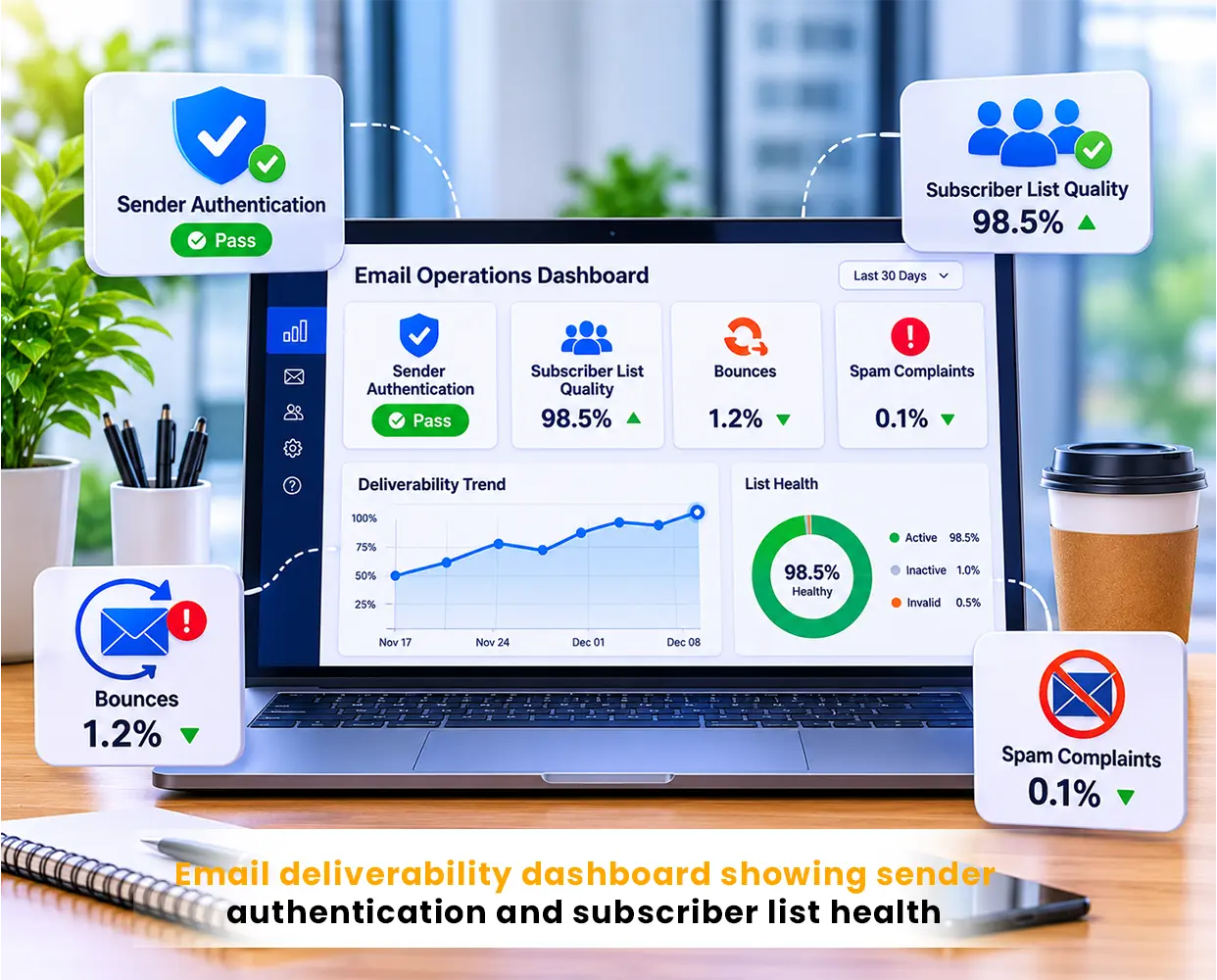
Even well-written emails can underperform if they do not reach the inbox. Use a reputable email platform, configure sender authentication such as SPF, DKIM, and DMARC where applicable, maintain clean subscriber lists, and remove invalid addresses.
Send to people who have given appropriate permission, make unsubscribing straightforward, and avoid purchased lists. Monitor spam complaints, bounces, and engagement rather than focusing only on the size of your database.
-
Test, Measure, and Improve
Test one meaningful variable at a time, such as the subject line, CTA wording, or message format. Compare results across similar audience segments and sending conditions.
Measure click-through rate, conversion rate, unsubscribe rate, bounce rate, and revenue where relevant. Open rates can provide directional insight, but privacy features and automated email activity can make them less reliable.
-
How to Build a Better Email Marketing Campaign
Start with a defined business objective. A campaign designed to generate qualified enquiries will need a different message and landing page from one intended to encourage repeat purchases.
A practical workflow is:
Define the goal:
Decide whether you want leads, sales, registrations, or retention.
Identify the audience:
Select the subscribers most likely to find the message relevant.
Plan the offer and content:
Address a real question, need, or decision.
Create and test the email:
Check the subject line, links, mobile layout, and CTA.
Review the outcome:
Compare conversions and engagement against your objective, then improve the next send.
For sustained engagement, coordinate email with your other marketing channels. For example, useful content from your social media marketing strategy can introduce a topic that subscribers later explore through email. Keep the message consistent while adapting it to each channel.
Where Email Marketing Automation Fits In
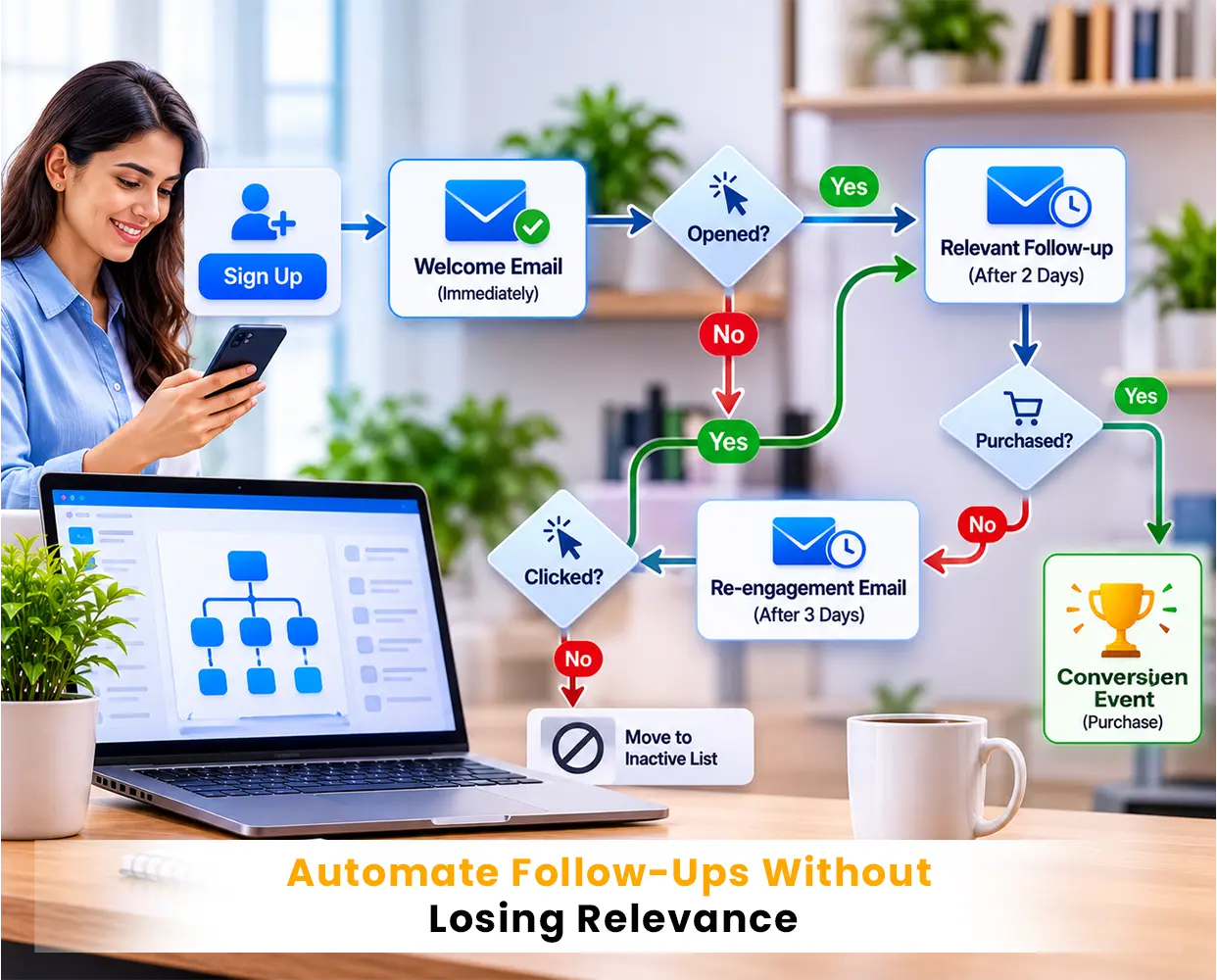
Email marketing automation sends timely, personalized messages based on subscriber actions, such as welcome emails, lead follow-ups, abandoned-cart reminders, and post-purchase emails.
Set relevant triggers and review workflows regularly to keep messages accurate and useful. Monitor conversions and unsubscribes to ensure automation improves engagement without overwhelming subscribers.
When Should You Consider Professional Email Marketing Services?
Managing campaigns in-house can become difficult when segmentation, design, deliverability, automation, and reporting all require attention. Professional support can help businesses bring these activities into a consistent process.
With an email marketing service, businesses can explore campaign planning, personalized messaging, email design, automation workflows, and performance tracking tailored to their objectives.
Before investing, identify the main gap in your current process. You may need better targeting, a more effective nurture sequence, stronger creative, or more reliable reporting. A clear diagnosis helps you prioritize work that can make a measurable difference.
Conclusion
A successful email marketing strategy focuses on relevant content, clear goals, and continuous improvement. Review your audience, campaign performance, and follow-ups, then improve what matters most. With the right approach, email marketing can support lead generation, customer retention, and business growth.